Choosing the right diesel generator set requires more than matching a nameplate kW rating to a building’s estimated demand. I evaluate the application, duty rating, running load, motor starting current, voltage, phase, runtime, site conditions, controls, emissions requirements, and service support before recommending a configuration. In this guide, I explain how to choose the right diesel generator set for different applications and how to avoid common sizing and installation errors.
This sequence prevents buyers from selecting a generator based only on peak kW. It also creates a clear record that can be reviewed by the facility owner, installer, equipment supplier, and electrical engineer.
A diesel generator set combines a diesel engine, alternator, control panel, fuel system, cooling system, exhaust system, and protective equipment in one power-generation package. The engine converts diesel fuel into mechanical rotation, while the alternator converts that rotation into electrical power. The control system monitors voltage, frequency, oil pressure, coolant temperature, engine speed, and fault conditions.
A diesel generator set may operate as emergency backup power, prime power, or continuous power. An automatic transfer switch detects utility failure and transfers selected loads to the generator after the set reaches stable voltage and frequency. For critical facilities, the transfer sequence, generator start time, fuel autonomy, redundancy, and load testing are as important as the engine’s rated output.
I begin by listing every load that the generator may supply, including lighting, servers, pumps, HVAC systems, elevators, refrigeration, production equipment, battery chargers, and fire-safety systems. For each item, I record voltage, phase, rated kW or kVA, power factor, operating hours, and whether the load runs continuously or intermittently. The total running load should include a documented allowance for future expansion rather than an arbitrary percentage.
A basic apparent-power calculation is kVA = kW ÷ power factor. For example, a 160 kW load operating at a 0.8 power factor requires approximately 200 kVA before starting-current and expansion requirements are considered. If the connected equipment has a 0.9 power factor, the same 160 kW requires approximately 178 kVA, so power factor directly affects alternator selection.
The largest motor often determines generator size because motors can draw several times their full-load current during starting. Pumps, compressors, fans, elevators, refrigeration units, and air-conditioning equipment may cause voltage and frequency dips if the generator alternator and engine cannot respond to the inrush current. I identify the largest motor, its starting method, locked-rotor current, acceleration time, and whether other loads must remain energized while it starts.
Reduced-voltage starters, variable-frequency drives, soft starters, and sequential load-starting controls can reduce the required generator capacity. However, these devices do not remove the need to confirm harmonic distortion, bypass operation, fault current, and compatibility with the alternator. For a facility with several motors, I normally model the starting sequence rather than adding motor kW values together.
Future expansion should be expressed in actual equipment terms, such as an additional 50 kW of servers, a 30 kW pump, or a second production line. Oversizing the generator too far can create low-load operation, wet stacking, incomplete combustion, carbon deposits, and inefficient fuel use. If the expected load changes substantially, two smaller generator sets in parallel may provide better redundancy and load matching than one oversized unit.
A qualified specialist should validate the final rating when the facility has large motors, nonlinear loads, parallel generator sets, medical equipment, data-center servers, or unusual starting sequences. The review should confirm both the generator’s standby or prime rating and the alternator’s ability to maintain acceptable voltage and frequency during load changes.
Standby power is intended for utility outages and usually permits limited annual operating hours under the manufacturer’s rating conditions. Prime power supports variable loads for applications where utility power is unavailable or unreliable, such as construction sites, remote facilities, and temporary power systems. Continuous power is intended for constant-load operation and requires a configuration designed for long-duration use.
I never compare standby and prime ratings as though they were interchangeable. A generator marketed at 500 kW standby may have a lower prime rating, and operating it continuously at the standby figure can shorten service life or violate the manufacturer’s operating conditions. The purchase specification should state the duty rating, expected annual hours, load profile, and required maintenance regime.
Diesel remains common for critical backup and prime-power applications because fuel can be stored on site and the engines provide strong performance under changing loads. Fuel consumption depends on generator size, load percentage, engine design, ambient conditions, fuel quality, and maintenance. I request fuel-consumption data at several load points, such as 25%, 50%, 75%, and 100%, instead of relying on one full-load figure.
Fuel autonomy should be calculated from the required runtime and the measured or specified consumption rate. The design must also consider tank capacity, fuel polishing, leak detection, tank location, refueling access, cold-weather behavior, and local fire-safety rules. For hospitals and data centers, the fuel system should be reviewed as part of the complete standby power system rather than treated as a separate accessory.
The generator must match the facility’s electrical characteristics, including line-to-line voltage, line-to-neutral voltage, frequency, phase configuration, grounding method, and phase rotation. Single-phase sets may suit homes, small shops, and selected portable loads, while three-phase sets are normally required for commercial buildings, industrial equipment, pumps, and large HVAC systems. A three-phase generator also requires attention to phase balance because uneven loading can increase alternator heating and voltage variation.
Common frequency requirements include 50 Hz and 60 Hz, but the correct selection depends on the local grid and connected equipment. I verify the voltage and frequency shown on equipment nameplates, distribution drawings, transformers, motor starters, and automatic transfer switches before finalizing the generator specification.
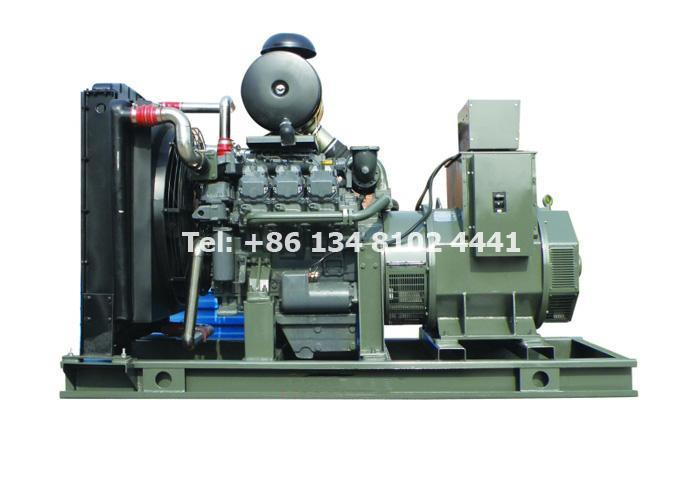
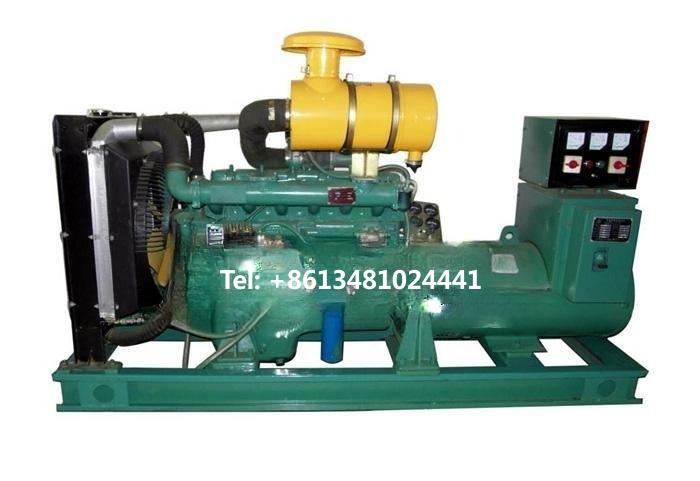
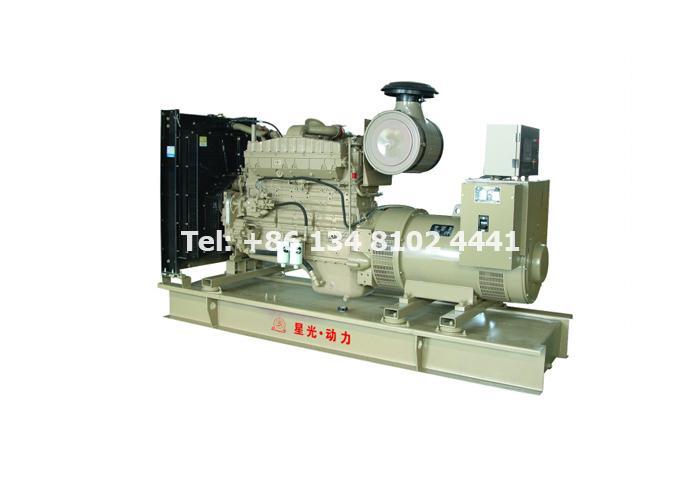
An open-frame generator may be suitable inside a properly designed plant room, while a weatherproof enclosure is more appropriate for outdoor commercial, agricultural, and construction applications. A silent or acoustic enclosure may be necessary near offices, homes, hospitals, schools, and residential boundaries. Containerized units can combine weather protection, fuel equipment, controls, and acoustic treatment for larger outdoor installations.
Cooling capacity must be checked against ambient temperature, altitude, radiator airflow, and room ventilation. A generator can have sufficient electrical capacity but still derate if hot air recirculates or the plant room cannot remove combustion heat. Portable and trailer-mounted sets should also be checked for road regulations, lifting points, ground stability, cable protection, and safe refueling.
For automatic backup, the generator controller should support automatic start, shutdown protection, event logging, alarm indication, battery monitoring, and communication with the building management system where required. The automatic transfer switch must be correctly rated for current, voltage, fault duty, transition type, and the number of transfer sources. Critical sites may also require bypass-isolation capability, remote annunciation, and generator paralleling controls.
Load bank testing is an important commissioning and maintenance activity because it verifies the generator under controlled electrical load rather than only during a brief no-load start. Testing can identify voltage-regulation problems, cooling limitations, fuel-system faults, battery weakness, and low-load operating issues before a real outage occurs.
| Application | Recommended duty focus | Sizing priority | Configuration priorities |
|---|---|---|---|
| Home or small office backup | Standby | Essential loads plus motor starting | Single-phase or three-phase, compact enclosure, automatic transfer |
| Small business | Standby or prime | Running load, HVAC, refrigeration, future expansion | Service access, fuel autonomy, remote alarms |
| Construction site | Prime | Variable loads, tools, pumps, compressors | Trailer or mobile frame, rugged enclosure, easy refueling |
| Farm or agricultural facility | Standby or prime | Pumps, ventilation, refrigeration, irrigation | Dust protection, fuel storage, outdoor cooling, phase balance |
| Hospital | Standby | Life-safety, medical, HVAC, and starting loads | Redundancy, automatic transfer, acoustic control, testing records |
| Data center | Standby | IT load, cooling, UPS interaction, step loading | Parallel sets, remote monitoring, fuel autonomy, low harmonic impact |
| Industrial plant | Prime, standby, or continuous | Motors, transformers, process loads | High short-circuit capability, sequential starting, service support |
For construction sites, I usually begin with prime power because the generator may run for extended periods without a dependable utility connection. The load profile often changes as tools, cranes, pumps, welders, compressors, and temporary offices are added. A trailer-mounted or skid-mounted unit with adequate fuel storage, weather protection, cable connection points, and service access is often more practical than a fixed standby configuration.
Agricultural facilities require special attention to dust, moisture, rodents, long cable runs, pumps, ventilation fans, and refrigeration. I check whether the largest pump or fan can start without excessive voltage dip and whether the enclosure and air filters suit the environment. Where utility service is weak but still available, prime operation with an automatic transfer system may be more suitable than a basic emergency-only generator.
Hospitals require standby diesel generators for critical facilities, but the generator is only one part of the emergency power system. I evaluate life-safety loads, legally required loads, critical branch loads, operating rooms, elevators, HVAC equipment, medical gas systems, fire pumps, and transfer times. Redundancy, periodic load bank testing, fuel quality management, documented maintenance, and qualified commissioning are central requirements.
For data centers, I assess the relationship between generators, uninterruptible power supplies, cooling systems, power distribution units, and server load growth. The design may require multiple generator sets operating in parallel so that maintenance can occur without removing all backup capacity. I also check step-loading behavior, harmonic compatibility, fuel autonomy, remote monitoring, and whether the proposed configuration supports the facility’s target availability design.
The purchase price is only one part of diesel generator set cost. I compare the initial generator, alternator, controller, enclosure, transfer switch, fuel tank, installation, exhaust, ventilation, foundations, cabling, commissioning, permits, and testing. I then add annual fuel consumption, oil and filter service, coolant maintenance, battery replacement, load bank testing, spare parts, operator training, and expected downtime exposure.
A simple lifecycle comparison can use this structure: total cost of ownership = purchase and installation + fuel + scheduled service + compliance testing + corrective repairs + downtime risk − resale value. A lower-priced set may become more expensive if it consumes more fuel, requires difficult-to-source parts, has limited local service support, or cannot meet emissions and noise requirements. I request written service intervals, warranty terms, parts availability, response arrangements, and commissioning responsibilities before signing a purchase order.
Before I approve a diesel generator set, I confirm the following information:
I recommend involving a qualified electrical engineer when the generator supplies a hospital, data center, industrial plant, high-rise building, fire pump, large motor load, or parallel power system. Specialist review is also appropriate when the load data is incomplete, the site has nonlinear loads, or the generator must coordinate with utility protection equipment. The final design should be based on verified drawings and measured or documented load information.
When comparing a Diesel Generator Sets Manufacturer, I look for documented design, assembly, testing, installation, commissioning, and maintenance capabilities rather than a product list alone. dingbo, formally Guangxi Dingbo Generator Set Manufacturing Co., Ltd., states that it was established in 2006 and provides generator sets using engine brands including Cummins, Volvo, Perkins, Deutz, Doosan, MTU, Yuchai, Weichai, Shangchai, and Ricardo.
The company’s published product range covers approximately 24 kW to 2,000 kW, or about 30 kVA to 2,500 kVA, with open, silent, containerized, trailer-mounted, mobile, and portable configurations. Its product information references ISO 8528 and BS 5514, while company information describes ISO 9001 and ISO 14001 management certifications, CE certification, factory testing, installation guidance, operator training, and technical support. These details are useful starting points, but I would still request the exact test report, rating sheet, fuel-consumption data, warranty terms, and local service plan for the proposed unit.
How to choose the right diesel generator set for different applications depends on matching the generator to the actual load profile, duty rating, electrical system, environment, operating schedule, and lifecycle budget. I would first define whether the project needs standby, prime, or continuous power, then calculate running load, motor starting demand, phase balance, power factor, and future expansion. After that, I would specify voltage, frequency, enclosure, cooling, noise control, controls, transfer equipment, fuel autonomy, emissions compliance, and maintenance access.
For a small business or home, a correctly sized standby set with automatic transfer may be sufficient. Construction sites and remote farms often require prime-rated mobile or weatherproof equipment, while hospitals, data centers, and industrial facilities may need redundant sets, advanced controls, load bank testing, and specialist engineering review. Before purchasing, I would compare fuel consumption, service intervals, installation requirements, downtime risk, warranty coverage, parts availability, and resale value. This process provides a practical answer to how to choose the right diesel generator set for different applications without relying on kW alone.


Copyright © Guangxi Dingbo Generator Set Manufacturing Co., Ltd. All Rights Reserved | Sitemap
Update cookies preferences





 WeChat