A large diesel generator set is a complex piece of industrial power equipment that integrates multiple mechanical, electrical, and electronic systems into a single reliable power unit. Understanding what makes up a large diesel generator set — and how each component functions — is essential for engineers, procurement specialists, and facility managers when selecting, commissioning, or maintaining this type of equipment.
This guide provides a complete breakdown of the core components and subsystems of large diesel generator sets (typically ranging from 200 kW to several megawatts), helping you make more informed decisions and better understand how these machines deliver reliable standby or prime power.
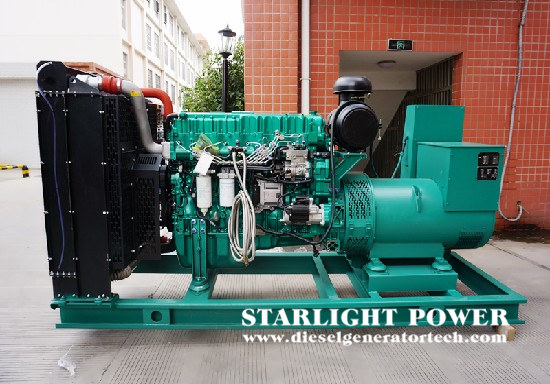
As for the connection, the large diesel generator set are primarily composed of three foundational elements: the diesel engine, the AC alternator (generator), and the control system. These three elements are supported by five major subsystems — the cooling system, lubrication system, fuel system, exhaust system, and starting system — all mounted on a common structural base frame.
The diesel engine is the heart of the entire generator set. It converts the chemical energy stored in diesel fuel into mechanical energy through compression ignition. Unlike gasoline engines that use spark plugs, diesel engines ignite fuel by compressing air to the point where its temperature rises high enough to combust injected diesel automatically.
For large generator sets, diesel engines are typically turbocharged and aftercooled, which significantly boosts power density and fuel efficiency. Key performance parameters include:
Rated Power Output (kW or HP)
Engine Speed (commonly 1500 rpm at 50 Hz or 1800 rpm at 60 Hz)
Torque Characteristics
Emission Standards Compliance (Tier 4, Stage V, etc.)
The internal architecture of the diesel engine includes the cylinder block, cylinder head, crankshaft, camshaft, pistons and connecting rods, turbocharger, and fuel injection system. Each of these sub-components works in precise coordination to ensure consistent, reliable power output.
For large industrial gensets, well-known engine brands include Cummins, Volvo Penta, Perkins, MTU, Doosan, Weichai, and Yuchai — each offering different trade-offs in performance, emissions compliance, and cost of ownership.
The AC alternator (also called the synchronous generator) is responsible for converting mechanical energy from the diesel engine into electrical energy. It operates on the principle of electromagnetic induction: as the rotor spins within a magnetic field, alternating current is induced in the stator windings.
The alternator consists of two main mechanical parts:
Rotor (Rotating Part): Creates the rotating magnetic field, driven directly by the engine shaft.
Stator (Stationary Part): Houses copper windings where the electrical current is generated.
Large diesel generator sets are almost always three-phase alternators, capable of delivering balanced power across three phases for industrial and commercial loads. Key selection parameters include rated voltage (typically 400V/230V or 6.3kV/11kV for high-voltage sets), power factor (usually 0.8), and insulation class.
The alternator also houses the Automatic Voltage Regulator (AVR), which continuously monitors output voltage and adjusts the excitation current to maintain a stable voltage regardless of load fluctuations. This is particularly critical for large installations powering sensitive equipment such as data centers, medical facilities, or CNC machinery.
Leading alternator brands used in large generator sets include Stamford, Leroy-Somer, Marathon, and Mecc Alte.
The method used to connect the diesel engine to the alternator directly affects the vibration characteristics, alignment tolerance, and service life of the generator set. There are two standard connection methods:
A flexible coupling (also known as an elastic coupling or disc coupling) connects the diesel engine output shaft to the alternator shaft. This method allows for a small degree of angular and axial misalignment and helps absorb vibration and torsional shock between the two units. It is commonly used in smaller to medium generator sets where vibration damping is a priority.
For large diesel generator sets, rigid connection is the more common method. In this configuration, high-strength bolts are used to fasten the alternator's rigid adapter plate directly to the diesel engine flywheel disc. This creates a compact, sturdy assembly with no flexible element between the two machines. The result is a more robust, compact footprint and improved mechanical efficiency, though it requires more precise alignment during assembly.
After connection, the engine-alternator assembly is mounted on the common base frame (underframe), forming the structural core of the complete generator set.
The base frame serves as the structural foundation of the entire generator set. It supports the combined weight of the diesel engine and alternator, absorbs vibration and dynamic loads during operation, and provides mounting points for ancillary components such as the fuel tank, battery, and exhaust silencer.
For large generator sets, base frames are typically fabricated from heavy structural steel. Many designs incorporate a built-in base tank that stores diesel fuel beneath the generator, saving floor space and simplifying fuel management. Anti-vibration mounts (resilient mounts or spring isolators) are often installed between the base frame and the floor to minimize transmitted vibration to the building structure.
The control system is the operational command center of the diesel generator set. It continuously monitors, manages, and protects the generator set during operation. Modern large generator sets use microprocessor-based digital controllers with LCD or touch-screen displays that provide real-time data on all key operating parameters.
There are two main configurations:
Knapsack (Back-mounted) Control Panel: Mounted directly on the alternator body. This compact configuration is suitable for standard installations where the operator is present near the generator.
Split (Remote) Control Panel: Installed separately in a control room, connected to the generator set via multi-core cables. This configuration is preferred for large power stations, data centers, or installations where remote monitoring and operation are required.
Large diesel generator sets are equipped with a comprehensive array of protective sensors, including:
Water Temperature Sensor — monitors coolant temperature and triggers shutdown if overheating occurs
Oil Pressure Sensor — monitors lubrication oil pressure and triggers an alarm or shutdown if pressure drops below safe limits
Fuel Level Sensor — provides real-time fuel level monitoring and low-fuel alerts
Battery Voltage Sensor — monitors starting battery condition
Speed Sensor — detects overspeed and underspeed conditions
When any monitored parameter approaches a pre-set limit, the control system triggers a visual and audible alarm to alert the operator. If the operator does not respond in time and the parameter continues to deteriorate, the control system will automatically shut down the generator set to prevent mechanical damage. This self-protection logic is a defining feature of modern large diesel generator sets.
Advanced controllers such as Deep Sea Electronics (DSE) and Smartgen series also support AMF (Automatic Mains Failure) functionality, which automatically starts the generator set when utility power fails and transfers the load — without operator intervention.
Large diesel engines generate substantial heat during operation. Without an effective cooling system, the engine would overheat rapidly and suffer catastrophic damage. The cooling system maintains the engine's operating temperature within the safe design range.
There are two primary cooling approaches for large generator sets:
A liquid coolant (typically a water-glycol mixture) circulates through passages in the engine block and cylinder head, absorbing heat. The hot coolant then passes through a radiator (heat exchanger), where it is cooled by airflow from a belt-driven or electrically driven cooling fan, before recirculating back into the engine.
For large generator sets installed in buildings or containerized enclosures, remote radiators or heat exchangers connected to external water circuits are commonly used.
Air-cooled systems use fins and directed airflow to cool the engine directly. They are simpler in construction but less effective for large power outputs. Air cooling is generally limited to smaller, portable generator sets.
The lubrication system delivers clean oil to all moving surfaces within the diesel engine — crankshaft bearings, camshaft bearings, cylinder walls, turbocharger bearings, and valve train components. Adequate lubrication reduces friction, minimizes wear, carries away heat from internal surfaces, and helps seal the combustion chamber.
Key components of the lubrication system include:
Oil Sump (Crankcase): Stores the engine oil reservoir
Oil Pump: Circulates oil under pressure throughout the engine
Oil Filter: Removes contaminants from the oil before it reaches bearing surfaces
Oil Cooler: Reduces oil temperature to maintain viscosity within the designed operating range
Oil Pressure Relief Valve: Prevents excessive oil pressure
For large generator sets, the oil change interval is a critical maintenance parameter. Extended oil drain intervals are possible with high-quality synthetic lubricants combined with oil condition monitoring sensors.
The fuel system manages the storage, filtration, and delivery of diesel fuel to the engine's injection system. A properly maintained fuel system is critical to consistent engine performance and fuel efficiency.
The fuel system of a large diesel generator set typically comprises:
Main Fuel Tank: Often a day tank or sub-base tank (ranging from 500 to 5,000+ liters for large installations)
Fuel Transfer Pump: Moves fuel from bulk storage to the day tank or directly to the engine
Primary Fuel Filter/Water Separator: Removes water and large particles from the fuel before it reaches the injection system
Secondary Fuel Filter: Provides fine filtration of the fuel immediately before injection
Fuel Injection Pump: Pressurizes and meters fuel delivery to each injector at precisely timed intervals
Fuel Injectors: Atomize and deliver fuel directly into each cylinder's combustion chamber
Fuel Return Lines: Return excess fuel from the injectors back to the tank
The quality and cleanliness of diesel fuel is one of the leading causes of generator set failures in the field. Regular fuel polishing and filter replacement are essential maintenance practices for large generator sets.
During combustion, the diesel engine produces exhaust gases that must be safely directed away from the operating area. The exhaust system performs this function while also managing noise levels and emissions.
Key components include:
Exhaust Manifold: Collects exhaust gases from each cylinder and channels them toward the turbocharger (if fitted)
Turbocharger: Uses exhaust energy to drive a turbine that compresses intake air, increasing engine efficiency and power output
Exhaust Silencer (Muffler): Reduces exhaust noise to acceptable levels. Residential-grade silencers can reduce noise by 25–35 dB(A)
Exhaust Piping and Flexible Bellows: Connects the silencer to the exhaust stack, with flexible sections to accommodate thermal expansion and vibration
Exhaust Stack: Discharges exhaust gases to atmosphere at a safe height
For generator sets installed in enclosed buildings, exhaust piping must be sized and routed correctly to avoid excessive backpressure, which can reduce engine output power and damage the turbocharger.
A large diesel generator set requires an external energy source to overcome compression resistance and bring the engine up to self-sustaining speed. The starting system provides this initial cranking energy.
Electric Starting is the universal method for large diesel generator sets. A heavy-duty DC starter motor, powered by a 12V or 24V lead-acid battery bank, engages with the engine flywheel ring gear to crank the engine. Once the engine fires and accelerates to self-sustaining speed, the starter motor disengages automatically.
The battery charger continuously maintains the starting battery at full charge, ensuring the generator set is always ready for an immediate start. For AMF-capable systems, the entire start sequence — from utility failure detection to generator stabilization and load transfer — typically completes within 10 to 30 seconds.
For large diesel generator sets installed in noise-sensitive locations — hospitals, commercial buildings, residential areas, or telecom base stations — a soundproof canopy or acoustic enclosure is fitted over the entire generator set assembly.
Acoustic enclosures are engineered to provide:
Noise attenuation of 10–25 dB(A) depending on design class
Weatherproof protection for outdoor installations
Ventilation management to ensure adequate cooling airflow
Access panels for routine maintenance
Containerized generator sets (packaged in 20-foot or 40-foot ISO containers) represent the highest level of integration, offering both acoustic treatment and structural protection suitable for remote or harsh-environment deployments.
When utility power fails or the generator set receives a start command, the sequence of events is as follows:
The control system detects the start signal and sends a command to the starting system.
The starter motor cranks the engine using battery power.
The fuel system delivers metered diesel to the injectors, which fire in sequence.
The diesel engine fires, accelerates, and reaches rated speed (1500 or 1800 rpm).
The alternator generates AC voltage; the AVR stabilizes it to rated output.
The control system verifies voltage and frequency are within specification.
The transfer switch (ATS) connects the generator to the load.
The cooling, lubrication, and exhaust systems operate continuously to sustain engine health under load.
Sensors stream live data to the control panel; any anomaly triggers alarms or automatic shutdown.
When normal power is restored or the set is shut down, the control system executes a controlled shutdown, typically after a cool-down period.
Jiangsu Starlight Power Generation Equipment Co., Ltd. was founded in 1974 and is one of the earliest manufacturers of generators and diesel generator sets in China. The company has a registered capital of 218.88 million yuan. The company covers an area of 86,000 square meters and a building area of 55,000 square meters. There are more than 660 employees, including 456 professional technicians and 106 senior technicians. It has 46 sales and service outlets nationwide. The main products are diesel engines, generator sets, and diesel generators, providing users with a one-stop service of design, supply, debugging and maintenance at any time. Starlight has always insisted on using first-class talents, building first-class enterprises, manufacturing first-class products, creating first-class services, and making every effort to build a first-class domestic enterprise. If any question please feel free to visit our website https://www.dieselgeneratortech.com/ or send email to [email protected].


Copyright © Guangxi Dingbo Generator Set Manufacturing Co., Ltd. All Rights Reserved | Sitemap
Update cookies preferences




 WeChat